About
James Richmond
I’m a British-Australian producer, musician and writer with over thirty years in the industry, working from a studio in Oxfordshire.
I came at this from the instrument end first. My degree is in musical instruments, how they’re built and why they behave the way they do, before I took a master’s in electronic music composition. That order matters more than it sounds like it should. I spent years on wood and wire before I spent years on voltage, and I still think about a synth patch the way I’d think about a guitar: what is it made of, and why does it respond like that?
I’m a multi-instrumentalist, which mostly means I’m a guitarist who kept picking things up. Guitar, bass, drums, keys, mandolin, mandola, and enough banjo to be dangerous. I play on most of the records I produce.
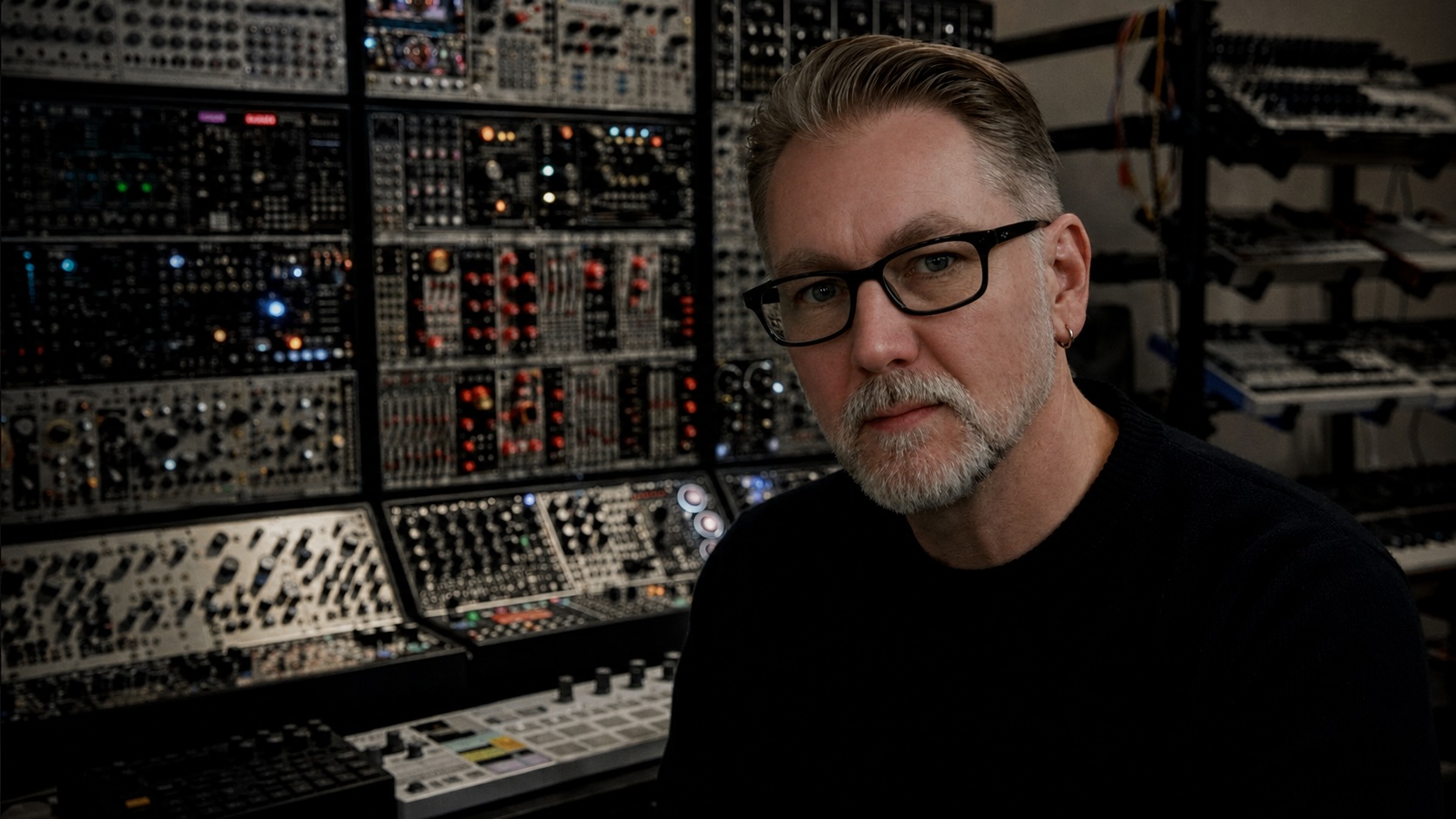
The other half of what I do is the technical end. I know Pro Tools, Logic and Avid systems properly: S6, HDX, MTRX and the DAD family, and audio over IP. I write about all of it for Production Expert, along with gear reviews and production technique, and I’ve written for Next Music, Australian Digital and Australian Guitar Magazine over the years. Writing keeps me honest. Testing something well enough to publish an opinion on it is a good way to find out whether you actually understood it.
And I build things. Dozens of bespoke Max patches, and more recently web apps, all chasing compositional approaches that off-the-shelf software doesn’t want to let you have. Most of them exist because I wanted to make a particular kind of noise and nothing on the market would do it.
Why “Volt Per Octave”?
On an analogue synthesiser, pitch is controlled by voltage. Send one more volt into the oscillator and the note jumps an octave. Volt per octave: it’s the standard nearly every synth ever built has agreed on.
I’ve always liked that. Underneath the music there’s a plain physical relationship. A bit more electricity, a higher note. Everything expressive that comes out of a studio is sitting on top of something that simple and that measurable.
That’s more or less how I work. Take the technical side seriously enough that it stops being in the way, then get on with the part that actually matters.
How I think about it
Good records don’t come from better equipment. They come from someone paying attention.
The gear matters, and I’ve spent years assembling a setup that gets out of the way, but it’s a floor rather than a ceiling. What actually changes a record is somebody in the room who understands what you’re reaching for and has enough technique to help you get there.
So I’ll ask you a lot of questions early on. What you want it to feel like, what records you keep going back to, what’s frustrating you about the demo. That conversation does more for the finished thing than any single piece of outboard.
Elsewhere
My own releases, writing and software projects live at jamesrichmond.com.
Come and make something
Tell me what you’re working on and I’ll tell you straight whether I’m the right person for it.
Get in touch